
A timber deck creates a warm outdoor spot to rest, entertain and enjoy your garden. But exposure to rain, sunlight and dampness, as well as continuous foot traffic can wear on its condition over time. Small things like a loose board or a peeling finish appear trivial but can become bigger difficulties if you overlook them.
This is vital for Melbourne homes as the timber can be wet and then dry, and then wet again as the weather conditions change. Spotting the early warning symptoms helps you decide if targeted repairs will do the trick, or if a complete replacement could be needed.
What Are the Signs That a Timber Deck Needs Repair?
Wooden decking can show clear signs of wear and tear before big problems happen. Seeing these problems early on can help you decide if repairs are needed.
1. Cracked, Splintered or Warped Decking Boards
Everyday use, water, and the sun can crack, split or bend boards. Check for cracks, splinters and areas that aren’t level. If only a few boards are broken and the structure is still sound – it may be enough to just replace those boards.
2. Loose, Rusted or Missing Fixings
Deck stability may be impacted by rusty brackets, loose screws and protruding nails. Look for broken connections and shifting boards. The surrounding wood may need to be inspected if the fasteners keep coming away.
3. Timber Rot, Mould and Moisture Damage
Timber deterioration can occur around posts, board ends and poorly ventilated locations due to moisture. Warning indications include soft wood, cracking portions and fungal development. Cleaning can eliminate surface mould, but deteriorating wood needs additional evaluation.
4. Wobbly Railings, Steps or Structural Supports
Structural issues can be indicated by damaged posts, sagging sections, loose railings and wobbly steps. Major motion requires professional inspection but minor problems can be corrected. If the deck seems dangerous, limit access.
5. Persistent Water Pooling and Poor Drainage
Water on or under a deck accelerates the wood’s deterioration. Look for areas where water collects, blocked drainage channels and rubbish trapped. Clear away any accessible blockages and sort out any drainage problems which will help to prevent further damage.
Can a Timber Deck Be Repaired Instead of Replaced?
Yes. When the damage is minimal and the primary supporting structure is still intact, a timber deck can frequently be restored. The degree of deterioration and the reliability of the damaged components’ repairs determine the optimal course of action.
Some common repair options are:
- Replacing damaged boards- If the supporting structure is sound, individual warped, splintered or cracked boards may be replaced.
- Repairing fixings- When individual connections are affected by corrosion or loosening, the appropriate screws and brackets can be changed.
- Addressing localised timber damage- If the remaining structure is sturdy, damaged pieces may be replaced or repaired.
- Restoring the surface- Weathered timber that is still structurally sound can be improved by cleaning, sanding and applying a suitable protective finish.
- Improving drainage- Fixing water pooling and limited airflow can help prevent recurring moisture damage.
Before you start – verify that there is matching timber and suitable replacement materials available. Repairs should not be confined to the visible defects but should be carried out on the underlying cause.
For example – replacing a damaged board without addressing the root cause of persistent water pooling can lead to deteriorating replacement timber.
When Should You Replace an Entire Timber Deck?
Damage involving substantial areas of deck or affecting the supporting structure may be acceptable for replacement.
Consider a professional assessment if you notice-:
- Extensive timber rot- Several boards, posts or beams have extensive degradation.
- Widespread structural movement- The deck sags, shifts or feels unstable in several areas.
- Repetitive repair problems- The same defects continually coming back after previous work.
- Multiple failing components- Several sections require replacement at the same time.
- Major underlying damage – Structural members or connections are no longer capable of providing reliable support.
Just because a deck is old doesn’t mean you have to replace it. Properly maintained decks can last for many years but poor drainage and lack of care can speed up the rotting process.
The decision should take into account the current state of the deck, the amount of work needed to be done, future maintenance requirements and the predicted performance of the completed structure.
Deck Repair vs Replacement- What Should Homeowners Consider?
When making the decision to repair or replace, there is more than just the immediate expenditures to consider. The owner should also examine the condition of the current structure and the likelihood of future upkeep.
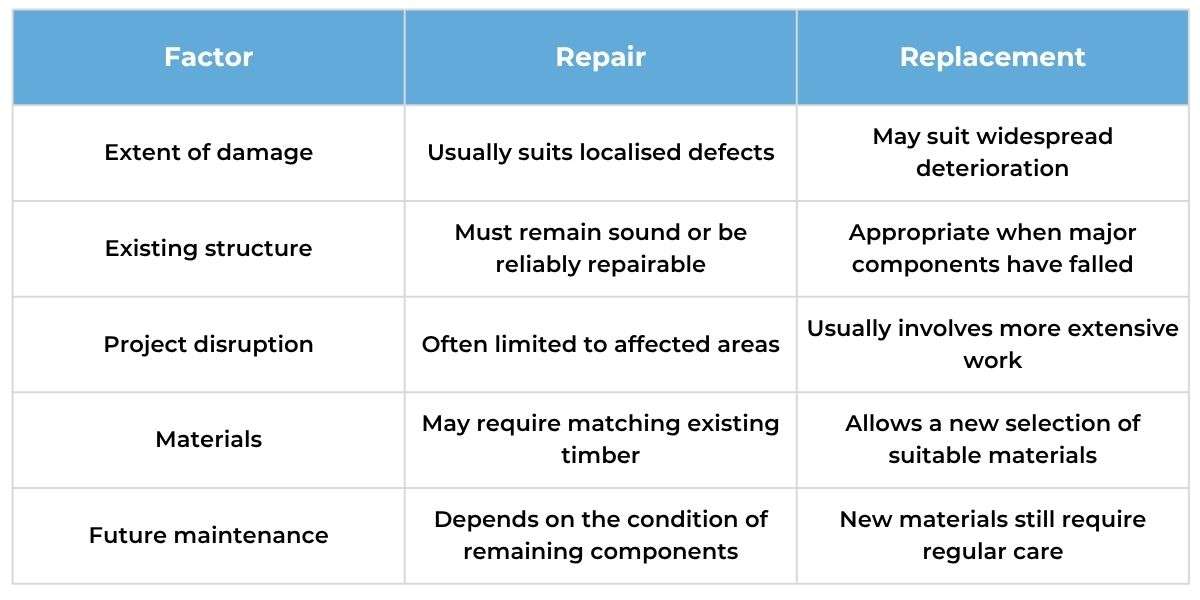
It may be practical to repair a few damaged boards, if the rest of the deck is in good condition. If structural problems are extensive or repairs are becoming frequent, replacement may be a better long term value.
How can people in Melbourne make their wooden deck last longer?
Small problems can be found early on with preventative maintenance – before they get worse.
Clean up any plants, dirt or other things that have sunk between the boards or along the edges of the deck. If organic materials act as moisture traps, degradation and staining can be accelerated.
Take care when cleaning the wood and any finishes already on it – because they need products and techniques specifically meant for them. Excessive pressure or harsh chemicals can damage surfaces.
Check Drainage and Airflow
Maintain open drainage routes and prevent soil, mulch or vegetation from remaining against timber components. This allows for adequate airflow under the deck to assist the area dry after rains.
If the same area keeps collecting water, don’t just mop it up, but analyse the reason for it.
Inspect Boards and Connections
Check the deck for cracks, splinters, loose railings, protruding fasteners and differences in level on a regular basis. Take additional caution around places that are still wet, stairwells and support posts.
If you have soft timber or considerable movement or damage that is difficult to assess, get professional guidance.
Maintain the Timber Finish
Some decks just need a quick cleaning and a new coat of oil. Others may need to be sanded first. Depends on the timber, the amount of sun and rain that it gets and what finish is already on it. Take care to prep the surface and read the product’s directions before recoating.
Oil or sealer can help maintain excellent timber in good condition but it will not repair rot or make weak boards and supports stronger.
Solve problems as they arise
Fixing isolated faults and drainage issues quickly will prevent future damage. Keep track of reoccurring issues to identify areas that need more attention.
An expert evaluation can assist define what the work is. Request a quotation showing the faults found, recommended work, structural issues and things that may affect the final price. concrete measures can also decrease degradation associated with dampness.
When Should You Call a Professional Deck Builder?
If you see a lot of movement, sagging boards, rotting supports, loose railings or a lot of damage then get an expert aid. A pro can look at the deck and recommend the best replacements or repairs.
If the deck appears unsteady, restrict access until it has been inspected. Before starting construction or making major changes – find out if your local council or the Victorian Building Authority require any licenses.
Frequently Asked Questions
How long should a Melbourne wooden deck last?
Timber species, construction quality, weather, drainage and maintenance impact lifespan. Timely inspections can detect degeneration early.
Is timber deck replacement or repair cheaper?
Rebuilding a deck is more effort than mending a few boards. Widespread decay, structural damage and frequent repairs – however can alter whether choice is more cost effective.
Is it possible to repair each rotting deck board separately?
If the damage is minimal and the supporting joists and connections are still in good condition, individual boards can frequently be replaced. Rot affected structural wood must also be evaluated.
How can I tell whether my deck is unsafe structurally?
Some warning signs are sagging, movement, weak supporting wood, unstable railings and structural connections that aren’t tight. If the deck looks unsteady, don’t let anyone on it and get a professional to look at it.
What should I do with my timber deck?
Yes. Timber decks can be maintained by cleaning, checking fasteners – making sure drainage is clear and applying any protective coatings as required. Maintenance demands depend on materials, exposure and use.
Conclusion
If your timber deck is starting to show its age then it can be hard to know whether to repair it or start again. A few damaged boards may be all that needs replacing if the structure underneath is still sound. But if rot has spread or the supports have become unstable, a full replacement may be needed. For Melbourne homeowners, the first step is to check the deck’s condition and find out what caused the damage before deciding how to tackle it.
If your deck is worn out or has structural issues, ReProp Group can help you find better options for your backyard. Homeowners who are looking for experienced deck builders Melbourne can get help from Reprop Group with planning a new deck or taking care of current decking needs. Get in touch with the team to talk about your project and get a quote.