
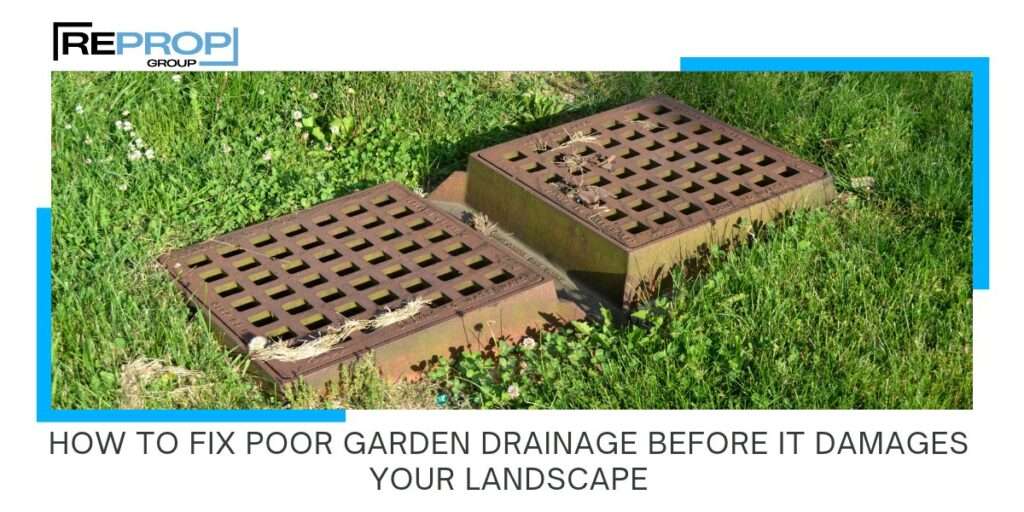
Badly drained gardens can turn a gorgeous outdoor landscape into a damp, waterlogged disaster. Standing water, sickly plants, soil degradation and badly maintained garden walks are all evident indications that excess water is not draining effectively. If these concerns are not addressed they might impact your grass, landscaping aspects and perhaps even the area around your home’s foundation.
The first step to finding the right solution is to understand what is causing the drainage problems. No matter if you have a small backyard, sloped garden or a large outdoor space – the right approach can help you protect your landscape and keep your garden healthier.
What Causes Poor Garden Drainage?
Garden drainage problems occur when water won’t soak into the soil or can’t drain away efficiently. Knowing the cause helps us identify the solution.
Heavy Clay Soil
Clay Soils hold water and drain slowly so garden beds become waterlogged after heavy rains. The addition of suitable organic matter can improve the soil structure depending on the condition that exists.
Incorrect Garden Slope
Gardens that slope toward the house or have low spots can collect water around the foundations, grass and paths. When you grade correctly, you can help runoff go to the right place to drain.
Compacted Soil
It can be compacted by people walking on it, by construction equipment and heavy machinery. Aerate the lawn and improve the soil to cut down on surface puddles and encourage plant growth.
Blocked Drains and Poor Storm water Management
Drains and outlets can get clogged with leaves, dirt and other things. Water can also build up in garden beds if the downspouts are broken or the roof runoff is not directed properly. These problems can be found early with the help of regular checks.
What Are the Signs of Poor Garden Drainage?
If you can spot the first signs of drainage problems, you can fix them before they spread to more of your yard.
Look for these common indicators:
- Standing water- Puddles sit on lawns or garden beds long after rain.
- Waterlogged soil- The ground stays wet, soft or muddy for a long time.
- Unhealthy plants- Leaves yellow, growth slows or roots begin to rot from too much moisture.
- Moss and algae – These thrive in damp conditions on soil, paving and in shade.
- Soil erosion- Moving water takes away soil, revealing plant roots.
- Damaged landscaping- Water weakens paths, takes away mulch or makes garden features less stable.
- Water near the house- Runoff builds up next to the outside walls or near the foundations.
Not all symptoms point to a drainage problem but problems that keep happening should be looked into more. If there is persistent water near the building, it should be checked out right away to see if it is caused by grading, storm water or something else.
How to Fix Poor Garden Drainage
The best way to do this depends on the source of the water, the type of soil, the slope of the garden and how easily water drains away. Here are several ways to begin. Check Below-
1. Better Soil Structure
If water drains slowly through your garden beds, look at the soil before you make changes. In dense soils it may be useful to add in appropriate organic matter- for instance compost, in order to improve the soil structure and growing conditions.
Aeration can help lawns suffering from compaction as the main issue. However, aeration is not a cure for problems due to a high water table or improper grading or blocked drainage system.
Don’t keep adding soil amendments without knowing the cause. A soil assessment can help determine the right treatment.
2. Repair the Garden Slope
Bad grading can cause water to pool in low areas or flow toward the home. Changing the level of the ground might help direct surface water to the right place to collect or drain it.
Before you change the slope – you should look at the buildings, fences, retaining walls, pavement and underground services that are close by. It is important to make sure that any new drainage path follows the rules and doesn’t move water to nearby land.
For big changes in levels – you should have a professional landscaper look at the site and suggest the best way to do it.
3. Install a French Drain Where Appropriate
A French drain is a type of subsurface drainage system that captures and redirects water that is travelling through the soil. A French drain is a subsurface drainage system to collect and divert water moving through the soil. It’s usually a pipe with holes in it, in a trench filled with gravel.
This kind of technology could be useful in areas where subsoil or groundwater is building up. Correct placement, trench depth, appropriate materials and a working outlet are all necessary for its efficacy.
Every situation can not be solved with a French drain. An unique strategy might work better if surface runoff, inadequate grading or roof drainage are the key issues.
4. Use Surface Drains and Drainage Channels
Before water flows throughout patios, lawns or other paved areas, surface drainage systems gather it. Grated pits, channel drains and appropriate collection locations are some possible solutions, depending on the location.
They can be useful for paved courtyards, outdoor entertaining spaces and walks where water collects during rainfall.
Proper installation is essential. The drainage channel must be properly located and the collected water must have a lawful and proper outfall. Fix a blocked or broken existing stormwater system – rather than building more drains without fixing the initial problem.
5. Choose Plants That Suit the Soil Conditions
When some places naturally stay wetter than others – choosing the right plants can help the landscape stay healthy. Pick species that will do well in the area’s climate, soil and expected level of moisture.
For gardens in Melbourne – think about plants that grow well in that area and can handle the conditions there. Native plants may work in some regions but not all natives are tolerant of soggy soil.
Raised garden beds can also be beneficial in some areas with poor drainage to improve growing conditions. But they shouldn’t be utilised to cover a significant drainage problem or divert water towards structures.
6. Maintain Gutters, Downpipes and Drainage Outlets
Blocked, damaged or misdirected gutters and downpipes can be a major source of garden water problems from roof runoff.
Regularly check gutters, downpipe connections, grates and drainage outlets within reach. When it’s safe to do so – clear away any accumulated junk and get professional help for systems that are broken or can’t be reached.
Check where downpipes are discharging their water and if runoff is pooling in garden beds. Roof water shall be drained away through an appropriate storm water system and not allowed to pond around the house.
Which Garden Drainage Solution Is Right for Your Property?
There are different ways to treat different problems. A useful guide is shown in the table below.
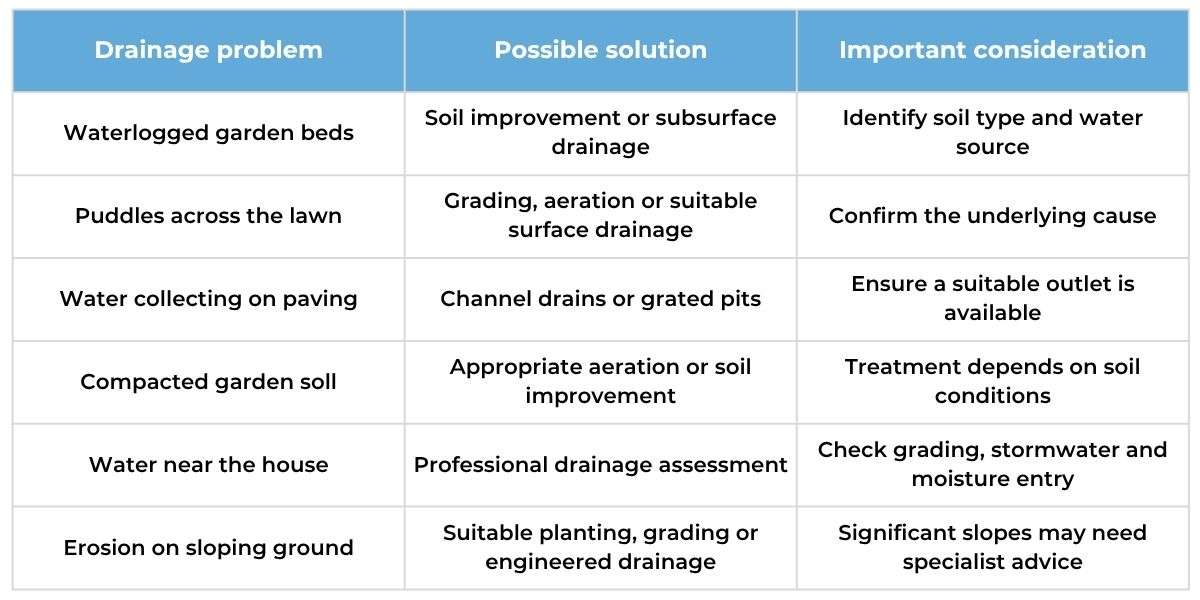
Before choosing a drainage system – check the locations where water gathers during rain and how long it takes to drain. This information can assist a specialist determine the probable reason and save unneeded work.
How to Prevent Garden Drainage Problems
After resolving a drainage problem – regular care can help prevent it from returning.
Check Your Garden After Heavy Rain
After rain inspect lawns, garden beds, pathways and low lying areas. Check where water gathers and if the same spots are there all the time.
Keep Drainage Points Clear
Clear leaves and debris from accessible grates, channels and outlets. If you regularly clean your gutters and water is still backing up then it’s time for repairs.
Protect Soil Structures
If possible, try to avoid walking across damp lawns or garden beds. Break up dirt again and again . If the dirt is compacted then use the correct treatment .
Drainage Plan Prior To Landscaping
Before installing new lawns, paving, retaining walls or garden beds : consider soil conditions, slopes and stormwater flow. Check for drainage issues early to avoid redoing work and to protect new landscaping.
When Should You Hire a Garden Landscaping Professional?
When to Call in the Professionals-
- Water keeps accumulating near your house.
- DIY drainage repairs don’t work.
- Heavy rains induce soil erosion .
- Signs of damage to retaining walls or paving.
- Water is flowing towards neighbouring properties.
- You need a new drain system.
The professional can look at the root of the problem and suggest appropriate solutions – which may include grading improvements, soil treatments or drainage installation.
How Landscape Project is Affected by Garden Drainage
Drainage must be seen as a crucial element of landscape design rather than only an optional embellishment. Excessive water can adversely affect lawns, plant roots, garden beds, paving and retaining structures.
For instance – laying fresh turf on wet ground can lead to recurring muddy spots. Likewise – garden beds placed in a badly graded region may cause plants to sit in soggy soil.
A more useful landscape can be created by planning drainage in addition to planting, paths, turf installation, and outdoor living spaces. Additionally it allows property owners to see any issues before making an investment in new features.
Protect Your Outdoor Space with ReProp Group
Poor drainage can affect the health of your plants, your outdoor surfaces and the long term health of your landscape. Early identification of the cause and choosing the right solution helps to create a more usable, attractive outdoor space.
ReProp Group can help homeowners explore landscaping options that are right for their property’s needs. To enhance the look of your garden, you might want to consider hiring professional garden landscaping Melbourne services that will help you create a functional, well-planned outdoor space.