
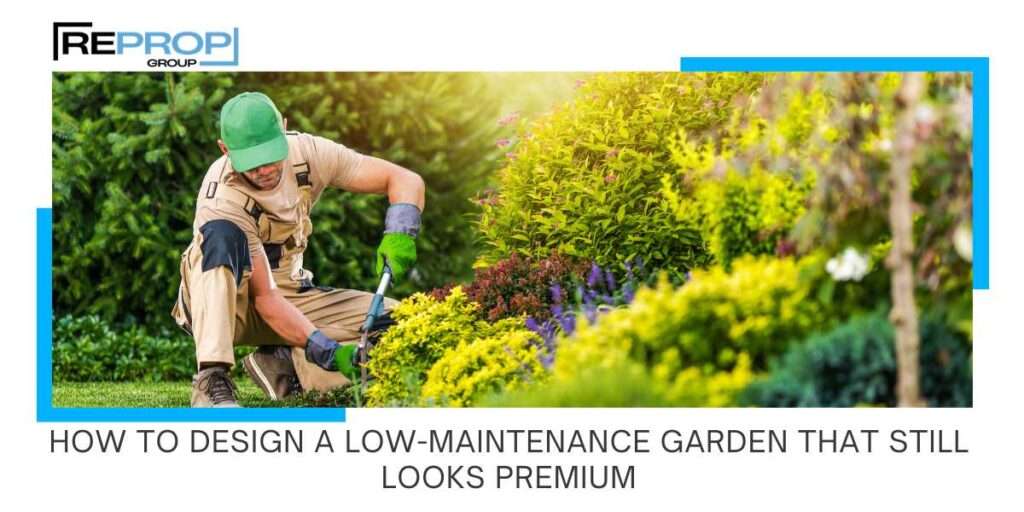
Designing a garden that looks luxurious but doesn’t demand constant upkeep is less about adding more plants or features—and more about making smarter design decisions from the beginning. A truly premium low-maintenance garden is built on structure, repetition, durability, and long-term thinking rather than constant seasonal intervention.
In Australian conditions, especially in urban environments where water restrictions, heat waves, and busy lifestyles are common, the goal is simple: create a space that looks intentionally designed all year round, without requiring weekly effort to keep it that way.
This guide breaks down how experienced landscape designers approach this balance between beauty and practicality.
Start with Structure, Not Plants
Most homeowners make the mistake of starting with plants. Professionals start with structure first—because structure is what holds the garden together visually when plants are not at their best.
Hardscape elements like paving, retaining walls, pathways, and edging define the “bones” of the garden. When these are thoughtfully designed, the garden still looks complete even if some plants are dormant or not flowering.
A common approach in premium low-maintenance gardens is:
- Strong geometric pathways or clean organic curves
- Defined garden beds with consistent edging
- Repeated structural elements (timber, stone, steel)
- Clear zones (entertaining, planting, screening)
Once structure is in place, plant selection becomes significantly easier and more strategic.
Choose Plants That Work Hard, Not Just Look Good
A premium garden is not about rare or high-maintenance species—it’s about plants that consistently perform with minimal intervention.
Experienced designers often prioritise:
- Evergreen plants for year-round structure
- Native Australian species adapted to local climate
- Drought-tolerant varieties
- Slow-growing shrubs that hold shape naturally
Instead of high-maintenance flowering beds, designers often layer plants in a way that mimics natural ecosystems. This reduces pruning, fertilising, and replanting cycles.
A key insight from professional landscapers:
If a plant requires constant shaping to look good, it does not belong in a low-maintenance design.
Use Mass Planting Instead of Mixed Chaos
One of the biggest differences between amateur and premium garden design is planting style.
Instead of scattering many different plant types, professionals use mass planting—large groups of the same plant species placed together.
This approach creates:
- Visual calm and repetition
- Easier maintenance routines
- Faster planting and replacement
- Stronger design identity
For example, instead of mixing 10 different shrubs, a designer may use just 2–3 species repeated across the entire space.
This is also where modern garden aesthetics feel most “premium”—clean, intentional, and controlled.
Reduce Lawn Areas Strategically
Lawns are one of the highest maintenance elements in any garden. The more lawn you have, the more mowing, watering, fertilising, and edging is required.
Premium low-maintenance gardens do not eliminate lawns entirely—they reposition them strategically.
Instead of large lawns, designers often:
- Reduce lawns to functional zones (kids, pets, entertaining)
- Replace unused lawn areas with gravel, mulch, or planting
- Use groundcovers for softer green coverage
This creates a more architectural look while significantly reducing maintenance time.
Hardscape Materials That Age Well
Material selection plays a huge role in long-term maintenance. Cheap or trendy materials often degrade quickly, leading to ongoing repair and replacement costs.
Premium low-maintenance gardens typically use:
- Natural stone or high-quality pavers
- Weathering steel or powder-coated metals
- Hardwood or composite decking
- Gravel in controlled zones
The goal is to choose materials that improve or stabilise visually over time, rather than deteriorate.
A key designer insight:
If a material looks worse after 2 years, it does not belong in a premium low-maintenance garden.
Smart Irrigation Over Manual Watering
Manual watering is one of the biggest hidden maintenance costs in gardens.
Professional designs almost always include automated systems such as:
- Drip irrigation for garden beds
- Zoned watering systems
- Moisture sensors in advanced setups
- Timer-based control systems
This ensures plants receive consistent hydration without daily intervention.
It also prevents the common problem of overwatering or underwatering, both of which lead to plant stress and replacement costs.
Mulch: The Unsung Hero of Low Maintenance Design
Mulch is often underestimated, but in professional landscaping it plays a critical role.
Proper mulching:
- Reduces weed growth
- Retains soil moisture
- Improves soil health over time
- Creates a clean, finished look
However, not all mulch is equal. Premium gardens often use:
- Organic bark mulch for natural aesthetics
- Decorative gravel for modern designs
- Stone mulch in dry or coastal areas
Replacing exposed soil with mulch alone can reduce maintenance effort by up to half in planting zones.
Design for Growth, Not Instant Impact
A common mistake homeowners make is expecting instant maturity. Premium gardens are designed to evolve.
Landscape designers plan for:
- Plant growth over 2–5 years
- Spacing that prevents overcrowding
- Gradual canopy development
- Long-term visual layering
This reduces the need for constant pruning or replanting, which is one of the biggest ongoing maintenance burdens.
A well-designed garden should actually look better over time, not worse.
Lighting That Enhances Without Complexity
Outdoor lighting is often added as an afterthought, but in premium low-maintenance gardens it is integrated from the beginning.
Instead of complex systems, designers use:
- Low-voltage LED lighting
- Pathway lighting for safety and structure
- Uplighting for feature plants or trees
- Minimal but strategic placement
The goal is not brightness—it is depth and atmosphere with minimal energy use and maintenance.
The Psychology of a “Premium” Garden
Interestingly, premium appearance is not about complexity—it is about restraint.
A garden feels high-end when:
- It has consistent repetition
- There is breathing space between elements
- Materials are cohesive
- Planting feels intentional, not random
- Maintenance needs are invisible
In many cases, the simplest gardens are actually the most expensive-looking.
Common Mistakes That Increase Maintenance
Experienced landscapers consistently see the same errors:
- Over-planting small spaces
- Mixing too many plant species
- Choosing fast-growing plants that require constant trimming
- Ignoring irrigation planning
- Using decorative features instead of structure
Each of these increases long-term workload and reduces visual clarity.
Final Thoughts
A low-maintenance garden that still feels premium is not created by adding more elements—it is created by removing unnecessary complexity and designing with long-term performance in mind.
The most successful gardens balance structure, repetition, durability, and intelligent planting to create a space that remains visually strong throughout the year with minimal intervention.
For homeowners considering professional outdoor transformation, thoughtful planning makes all the difference. Many projects involving garden landscaping Melbourne follow these exact principles to achieve lasting results that feel both refined and effortless.
For expert-level design execution and tailored outdoor solutions, brands like Reprop Group focus on creating landscapes that combine aesthetic value with long-term practicality—ensuring your garden doesn’t just look premium on day one, but continues to do so for years to come.